All projects
2026 · National FinalistNASA Blue Skies Competition

AIRSHIELD

Detecting aircraft damage with onboard sensors and machine learning.

The idea

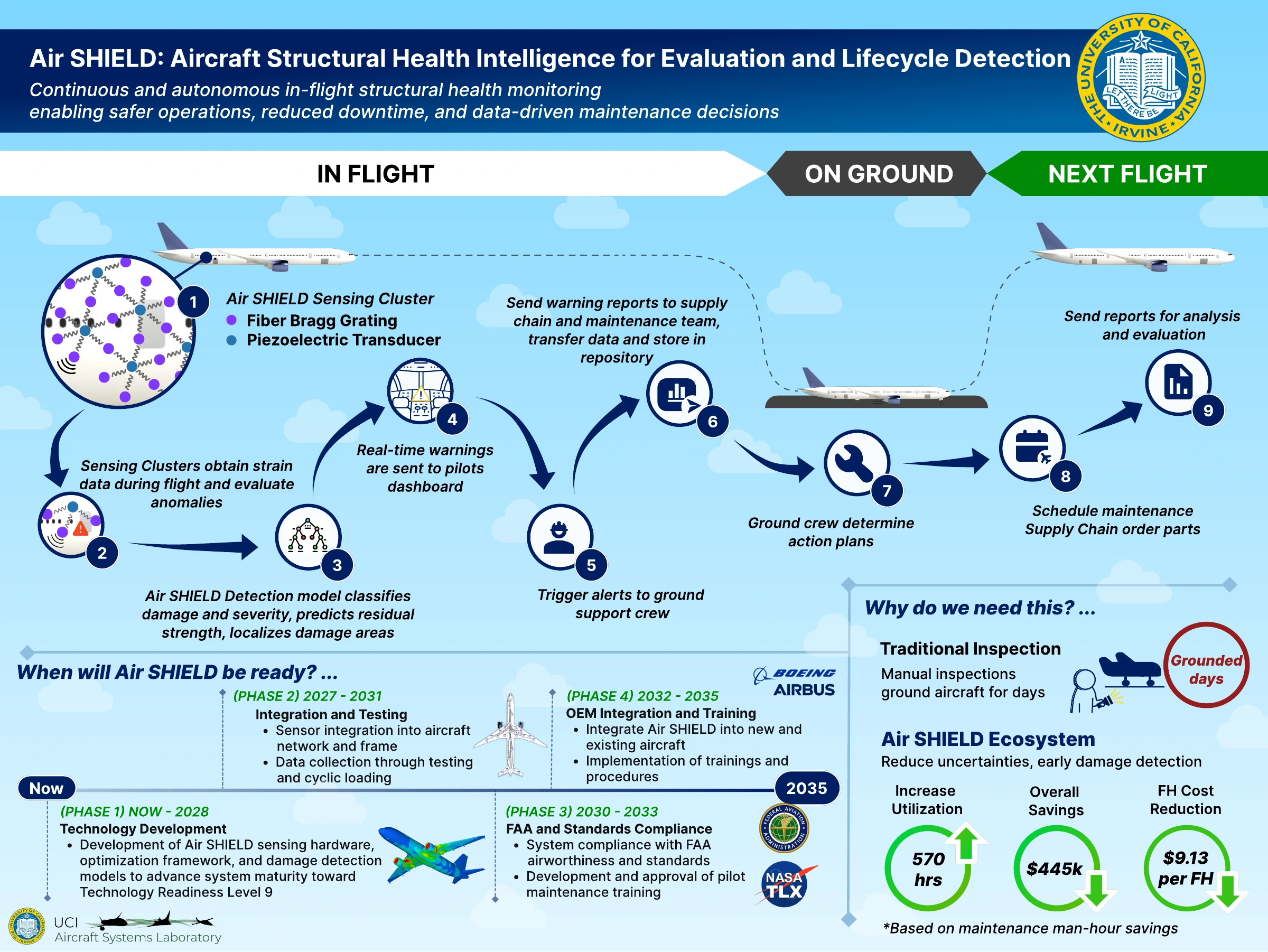
AIRSHIELD combines fiber optic sensors, piezoelectric transducers, and machine learning to monitor aircraft structures. Our research, preliminary experiments, and cost analysis supported its commercial potential.
AIRSHIELD project poster for the 2026 NASA Blue Skies Competition
Our AIRSHIELD concept, from sensing to maintenance. Competition record

My contribution

My work focused on onboard sensing, damage mechanisms, structural simulation, and an initial GNN study.

Onboard sensing

I researched fiber Bragg grating sensors and piezoelectric transducers, and how they can work together to detect aircraft damage.
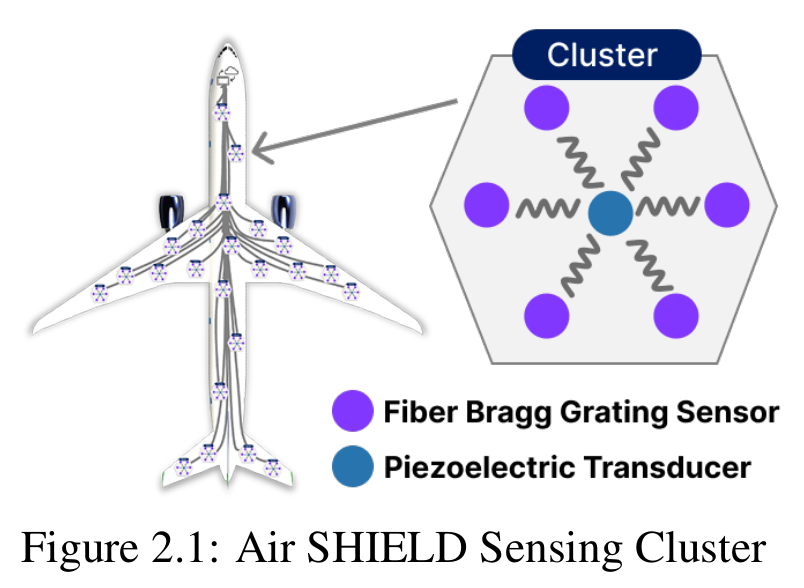
Figure 2.1 showing an aircraft sensing cluster with fiber Bragg grating sensors and a piezoelectric transducer
The sensing concept pairs piezoelectric excitation with fiber Bragg grating measurements. Figure 2.1 in report

Damage mechanisms

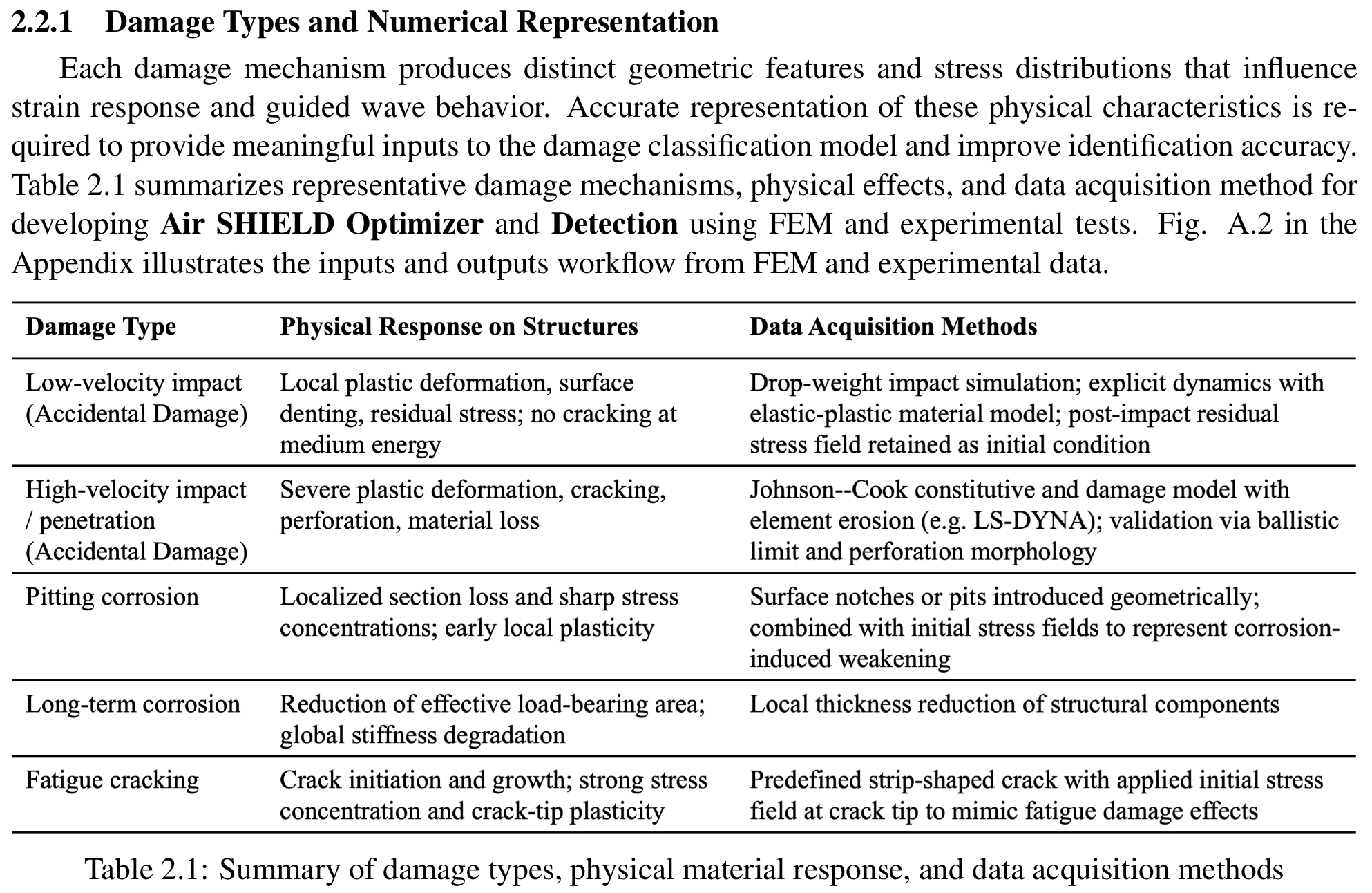
I compared impact, corrosion, and fatigue damage and their physical effects. I used Ansys LS DYNA for bird strike simulations and Ansys Mechanical for structural analysis.
Section 2.2.1 and Table 2.1 comparing aircraft damage types, structural response, and data acquisition methods
Damage mechanisms, structural response, and ways to generate representative data. Table 2.1 in report

Graph neural networks

I used PyTorch to explore GNNs for spatial sensor data and ran a small study to test whether they could recognize damage patterns.
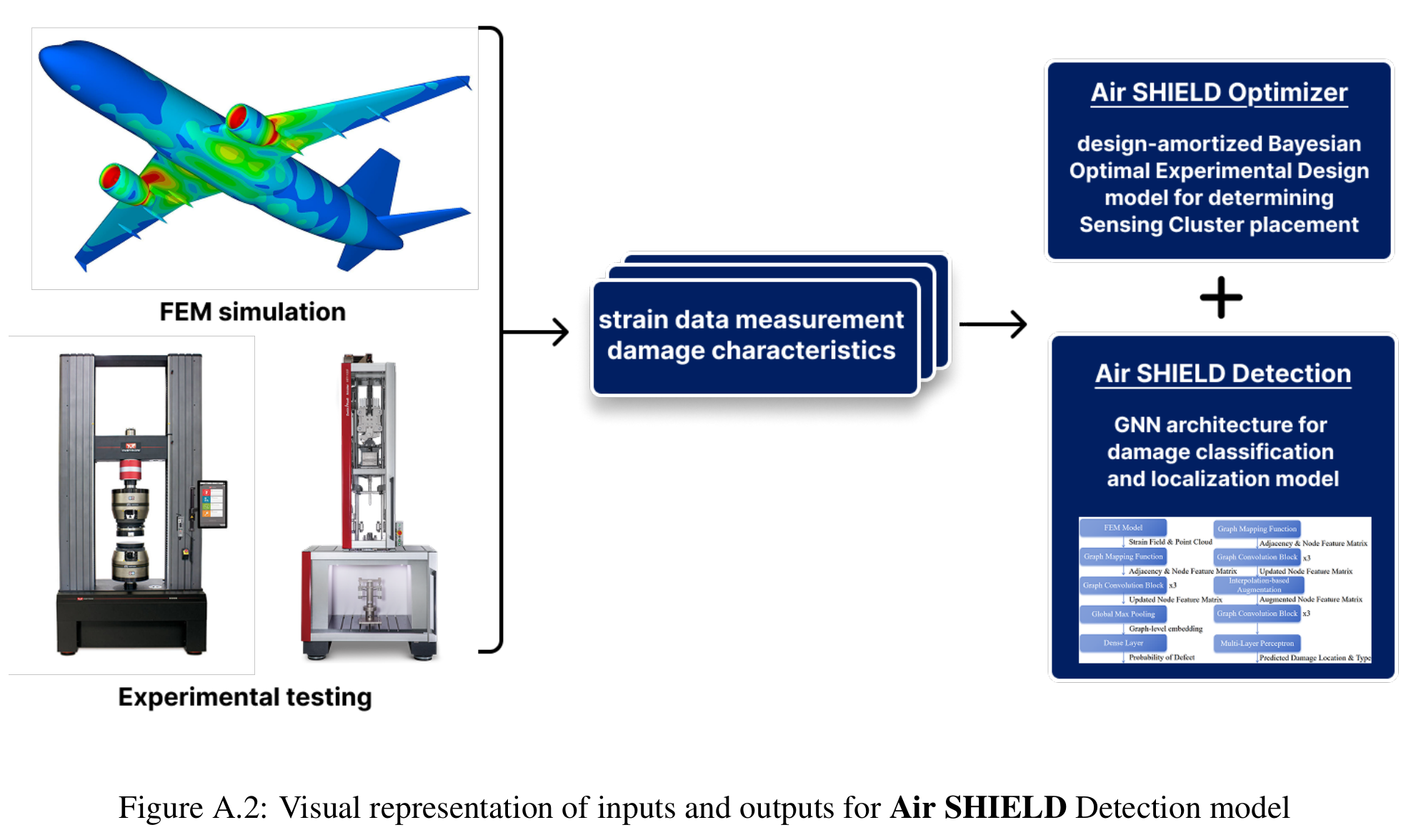
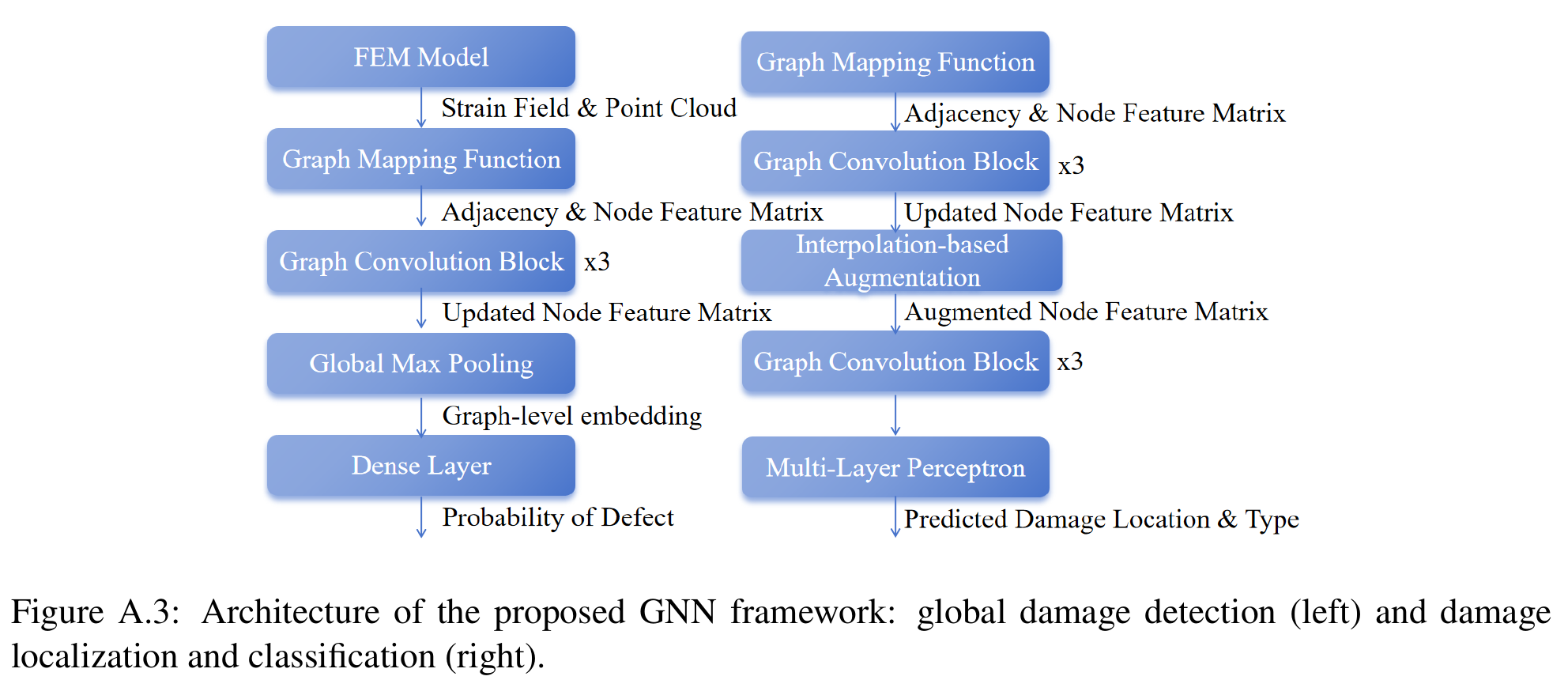
Figure A.2 connecting simulation and experimental data to sensor placement and GNN damage detection
The proposed workflow connects simulation and experimental data with sensor placement and damage recognition. Figure A.2 in report
Figure A.3 showing the proposed GNN branches for global damage detection and damage localization and classification
The proposed GNN framework separates global damage detection from localization and classification. Figure A.3 in report

Presenting at NASA

As one of eight national finalists, we presented at NASA Langley Research Center. Our team received $9,000 in research funding and won the Best Infographic Award.
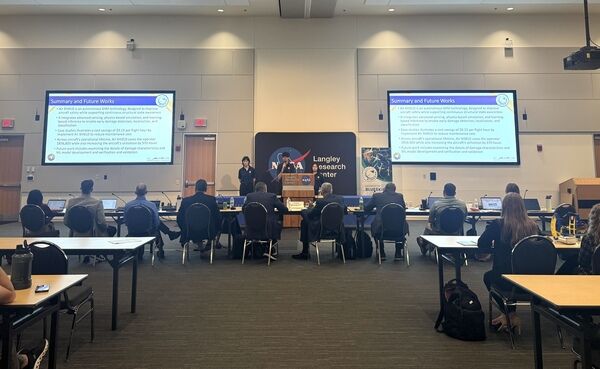
Our AIRSHIELD team presenting to the audience at NASA Langley Research Center
Our team presenting AIRSHIELD at NASA Langley.