Pneumatic Rover
A rover powered by compressed air, built to follow a course with two turns.
Second place in our group at the final competition
The course
Three straight sections.
Two turns.
For MAE 106, we built a rover that could travel 3 m, turn, continue for 15 m, turn again, and travel the final 3 m.
- 3 mthen turn
- 15 mthen turn
- 3 mto finish
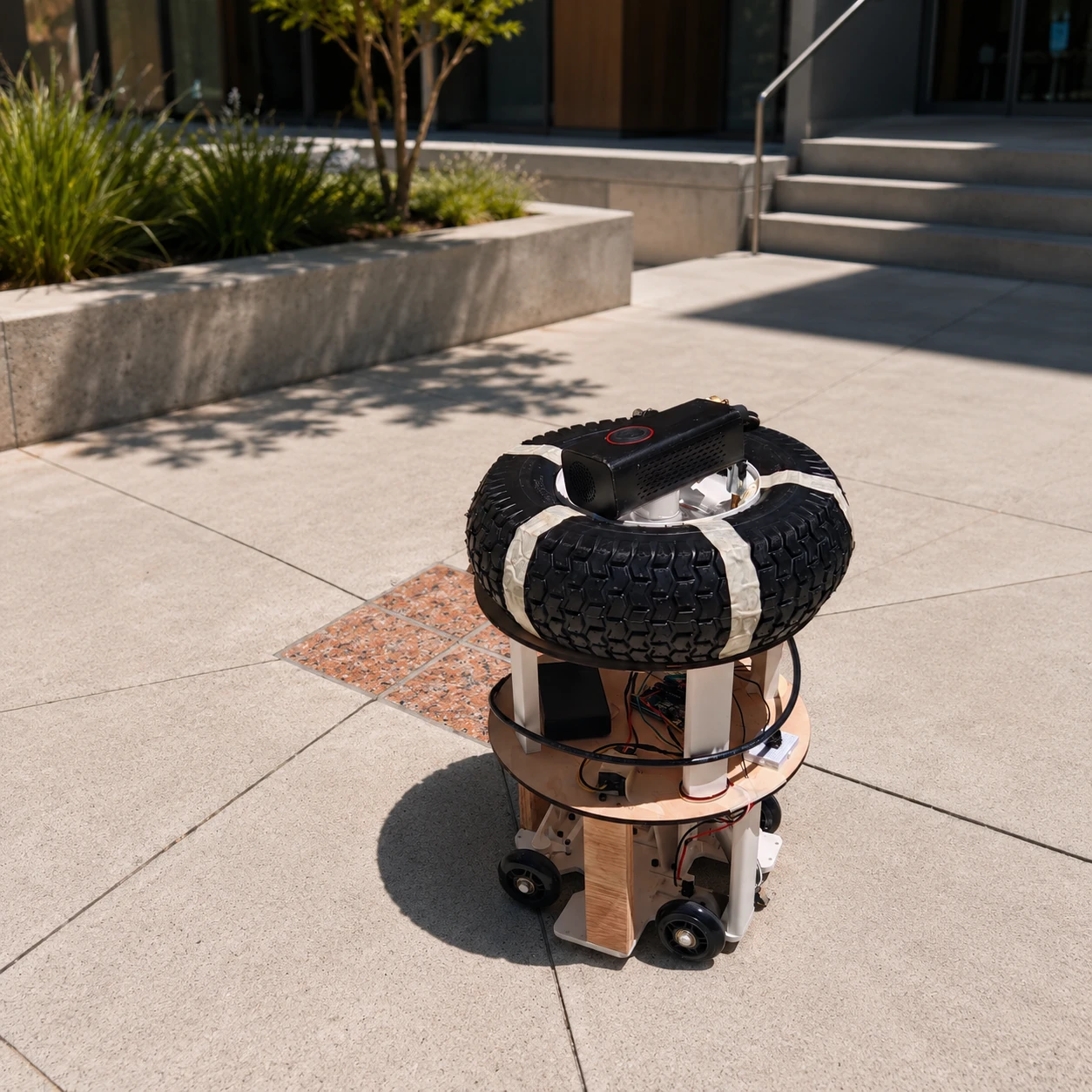
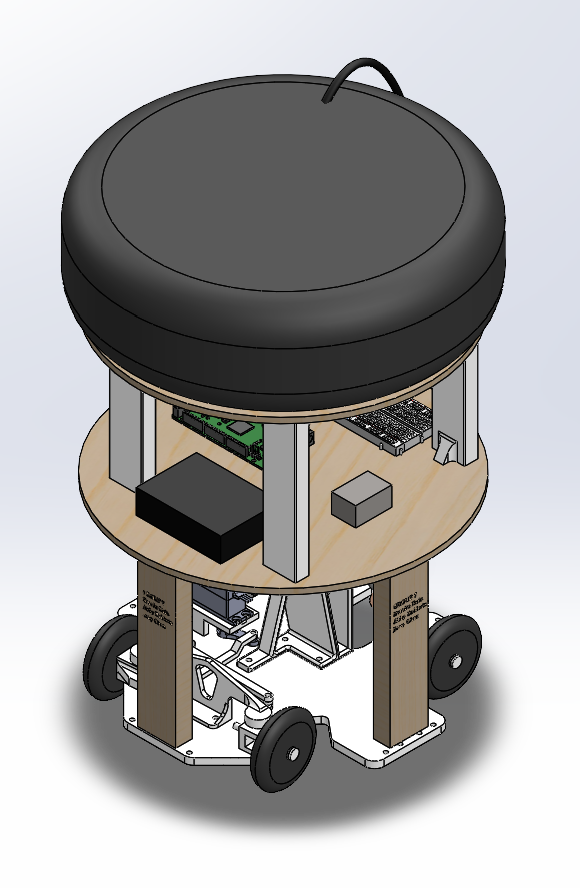
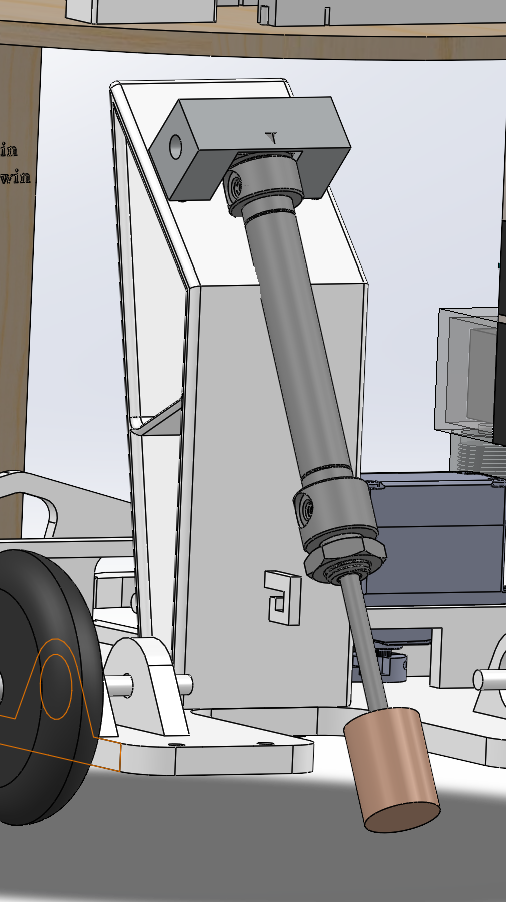
Air from an inflated tire drove a piston that pushed against the ground. A small compass measured heading with roughly 10° of error, while limit switches on the rear wheels measured distance.
My role
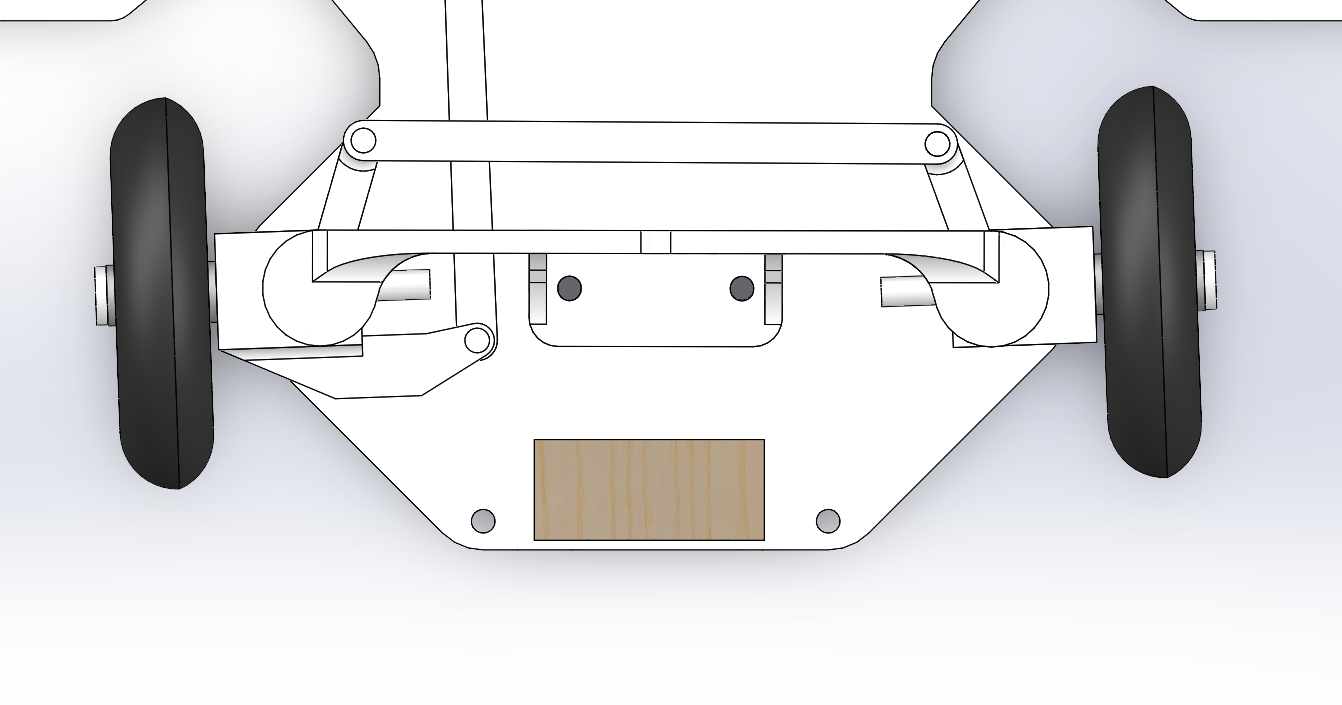
I coordinated team tasks and testing, and helped design the chassis and steering in SolidWorks. I also 3D printed parts and wrote, tuned, and debugged the control code.
Testing the rover
Building the rover
We used a modular frame with printed parts, carbon fiber tubes, and wooden panels. Parts such as the steering linkage and piston mount could be removed and replaced as we tested the design.
Getting back onto a straight path
The control code used wheel travel to track distance and the compass to read heading. I tuned a predefined steering sequence for turns and used PID steering to correct the heading on straight sections.
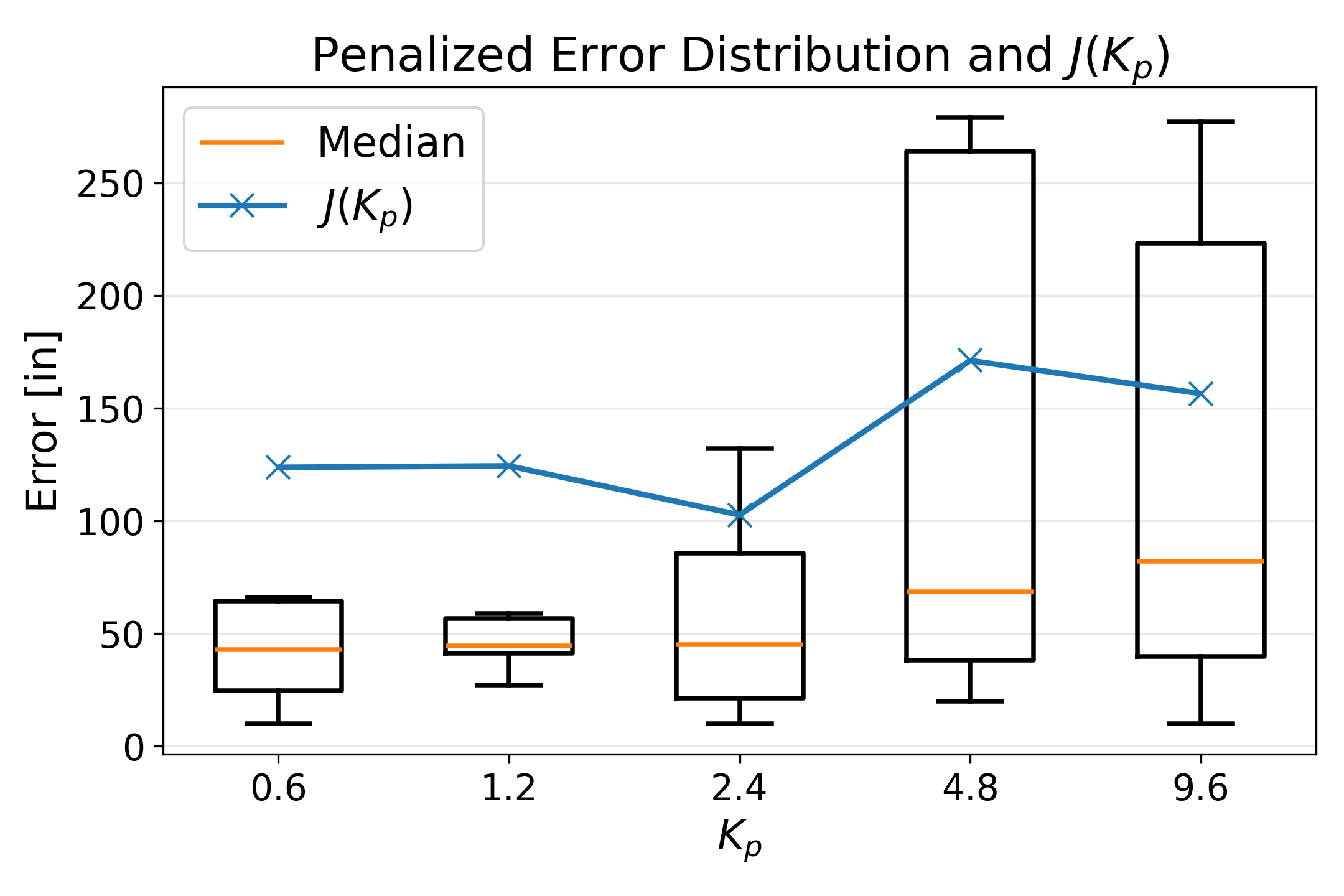
We tested five proportional gains, with ten runs at each setting. Each test started with a sharp right turn followed by a 10 m straight run. A gain of 2.4 gave the lowest error score, which combined sideways drift with a penalty for leaving or nearly leaving the course.